Understanding your body fat percentage is crucial for tracking fitness progress, improving health, and achieving your weight goals. Unlike the number on a scale, body fat percentage provides a more accurate measure of your body composition, distinguishing fat from lean muscle mass. Whether you are an athlete, a fitness enthusiast, or someone starting a weight loss journey, knowing your body fat percentage can make a significant difference in how you approach nutrition and exercise.
In this guide, we will explain how to calculate body fat percentage, introduce the body fat percentage formula, and show you how to use a body fat calculator. Including an army body fat calculator for military standards. Plus, we’ll share tips for improving accuracy and interpreting your results.
What is Body Fat Percentage?
Body fat percentage refers to the proportion of fat in your body compared to your total body weight. For example, if you weigh 150 pounds and have 30 pounds of fat, your body fat percentage is 20%.
Unlike BMI (Body Mass Index), which only considers weight and height, body fat percentage differentiates between fat, muscle, bone, and water. This makes it a more accurate indicator of health, fitness, and overall body composition.
Why Calculate Body Fat Percentage?
There are several reasons why calculating body fat is important:
- Monitor Health Risks: High body fat percentage increases the risk of heart disease, diabetes, and certain cancers.
- Track Fitness Progress: Muscle weighs more than fat, so your scale weight might not reflect true progress.
- Set Realistic Goals: Understanding your body fat helps in setting achievable fitness targets.
- Military and Professional Standards: Certain professions, like the military, require specific body fat levels, making an army body fat calculator essential.
How Do I Calculate Body Fat?
There are multiple methods to determine your body fat percentage. Some are simple, while others are more accurate but require professional equipment.
1. Using a Body Fat Calculator
The easiest and fastest way to calculate body fat percentage is through a body fat percentage calculator. These online tools require basic inputs such as:
- Age
- Gender
- Weight
- Height
- Waist circumference
- Neck and hip measurements (for some formulas)
Once you input your data, the calculator uses established formulas to estimate your body fat percentage instantly. Our free body fat calculator is a reliable option for anyone looking to track their progress without complicated procedures.
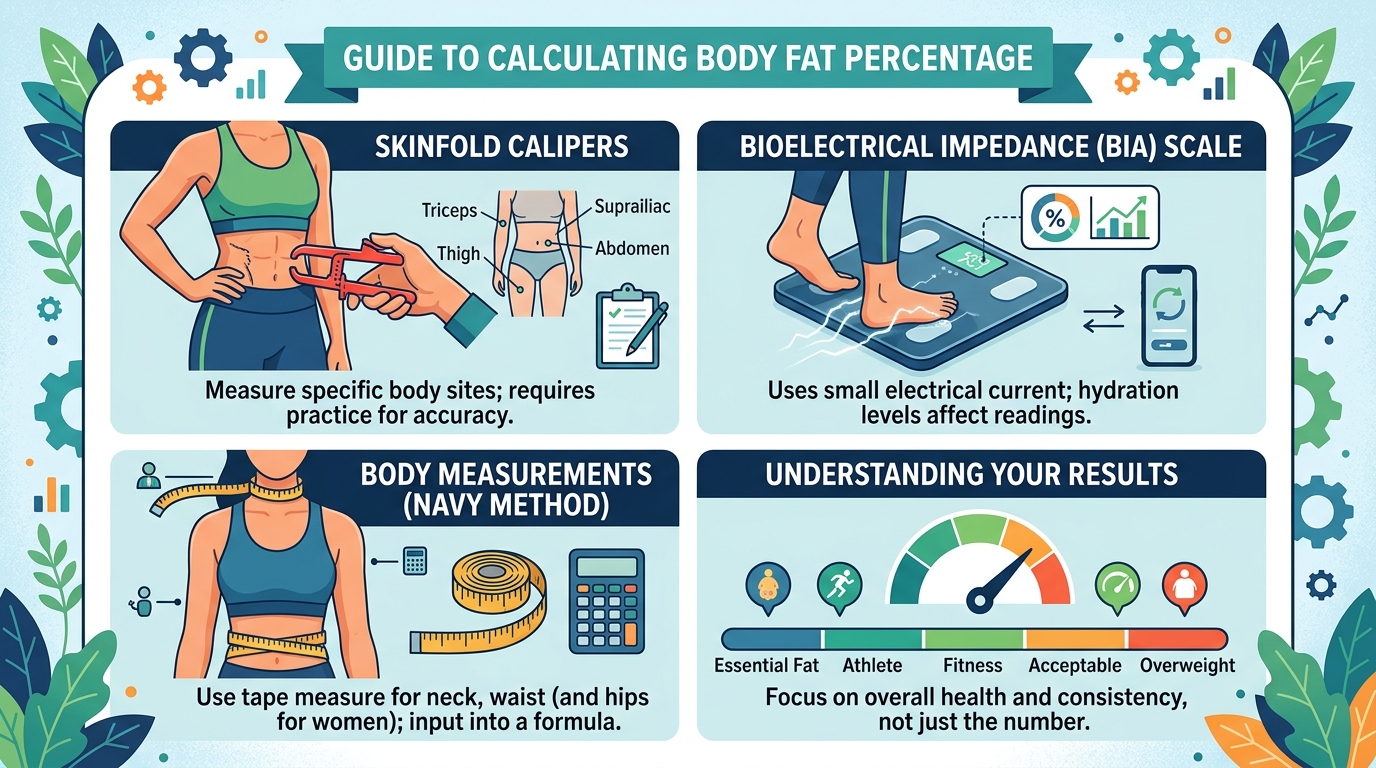
2. Using the Body Fat Percentage Formula
If you prefer to calculate it manually, the body fat percentage formula differs slightly between men and women. The most common method uses circumference measurements:
For men:Body Fat %=495/(1.0324−0.19077×log(waist−neck)+0.15456×log(height))−450
For women:Body Fat %=495/(1.29579−0.35004×log(waist+hip−neck)+0.22100×log(height))−450
Measurements are taken in inches or centimeters depending on your unit preference. While accurate, this method requires careful measuring to avoid errors.
3. Using Skinfold Calipers
Skinfold measurements involve pinching fat at specific body locations to estimate overall body fat. Common sites include:
- Abdomen
- Thigh
- Triceps
- Suprailiac (above the hip bone)
The measurements are plugged into standard formulas to calculate body fat percentage. While more precise than visual estimates, this method requires practice or professional assistance.
4. Bioelectrical Impedance Analysis (BIA)
BIA devices send a small electrical current through your body. Because fat resists electricity more than muscle, the device estimates your body fat percentage. Many scales now include BIA technology, making it convenient for home use.
5. Hydrostatic Weighing and DEXA Scans
For the most accurate measurements, you can use hydrostatic weighing (underwater weighing) or a DEXA scan. These methods are typically available at gyms, clinics, or research facilities. While precise, they are expensive and not practical for regular tracking.
How to Use a Body Fat Calculator
Using a body fat calculator is simple, even if you’re new to fitness tracking:
- Gather Your Measurements: Measure weight, height, and circumferences accurately.
- Select Your Calculator: Choose a standard body fat percentage calculator or specialized options like an army body fat calculator.
- Enter Your Data: Input all the required numbers.
- Calculate Your Body Fat Percentage: Click “Calculate” to get your estimated body fat percentage.
- Interpret the Results: Compare your percentage to recommended ranges for your age and gender.
Body Fat Percentage Standards
Different organizations have varying standards for healthy body fat. Here’s a general guideline:
For Men:
- Essential fat: 2–5%
- Athletes: 6–13%
- Fitness: 14–17%
- Average: 18–24%
- Obese: 25%+
For Women:
- Essential fat: 10–13%
- Athletes: 14–20%
- Fitness: 21–24%
- Average: 25–31%
- Obese: 32%+
These numbers help you understand whether your body composition is within a healthy range or if adjustments in diet and exercise are needed.
Using an Army Body Fat Calculator
The military has strict requirements for body fat based on age, gender, and height. The army body fat calculator uses waist, neck, and hip measurements to estimate compliance with these standards. This is essential for active duty personnel or recruits undergoing fitness assessments.
Our online army body fat calculator makes it easy to check your eligibility without complicated manual calculations.
Tips for Accurate Body Fat Measurement
- Measure Consistently: Always take measurements at the same time of day, preferably in the morning.
- Use Proper Technique: Incorrect tape placement or caliper pinching can skew results.
- Track Over Time: One measurement is not enough—monitor trends over weeks or months.
- Consider Multiple Methods: Using a calculator along with a caliper or BIA device can improve accuracy.
- Hydration Matters: Being dehydrated can affect BIA and scale readings.
Why a Free Body Fat Calculator is the Best Choice
Using a free online body fat percentage calculator has several advantages:
- Convenience: Calculate your body fat from home in seconds.
- No Equipment Needed: Unlike calipers or DEXA scans, all you need are simple measurements.
- Accuracy: Modern calculators use tested formulas trusted by fitness and military professionals.
- Track Progress: Repeated measurements over time help you adjust workouts and nutrition.
Our free body fat calculator is designed to be user-friendly, accurate, and compatible with standard body fat formulas, including options for military standards.
Conclusion
Knowing how to calculate body fat percentage is essential for anyone serious about fitness and health. Whether you choose manual calculations, calipers, BIA devices, or a body fat calculator, the key is consistency and accuracy.
Tracking your body fat percentage, rather than just weight, provides a clearer picture of your body composition, helping you set realistic fitness goals, monitor progress, and maintain a healthy lifestyle.
For a quick, accurate, and free way to calculate your body fat, try our online body fat calculator today and take the first step toward a healthier, more informed approach to your fitness journey.