
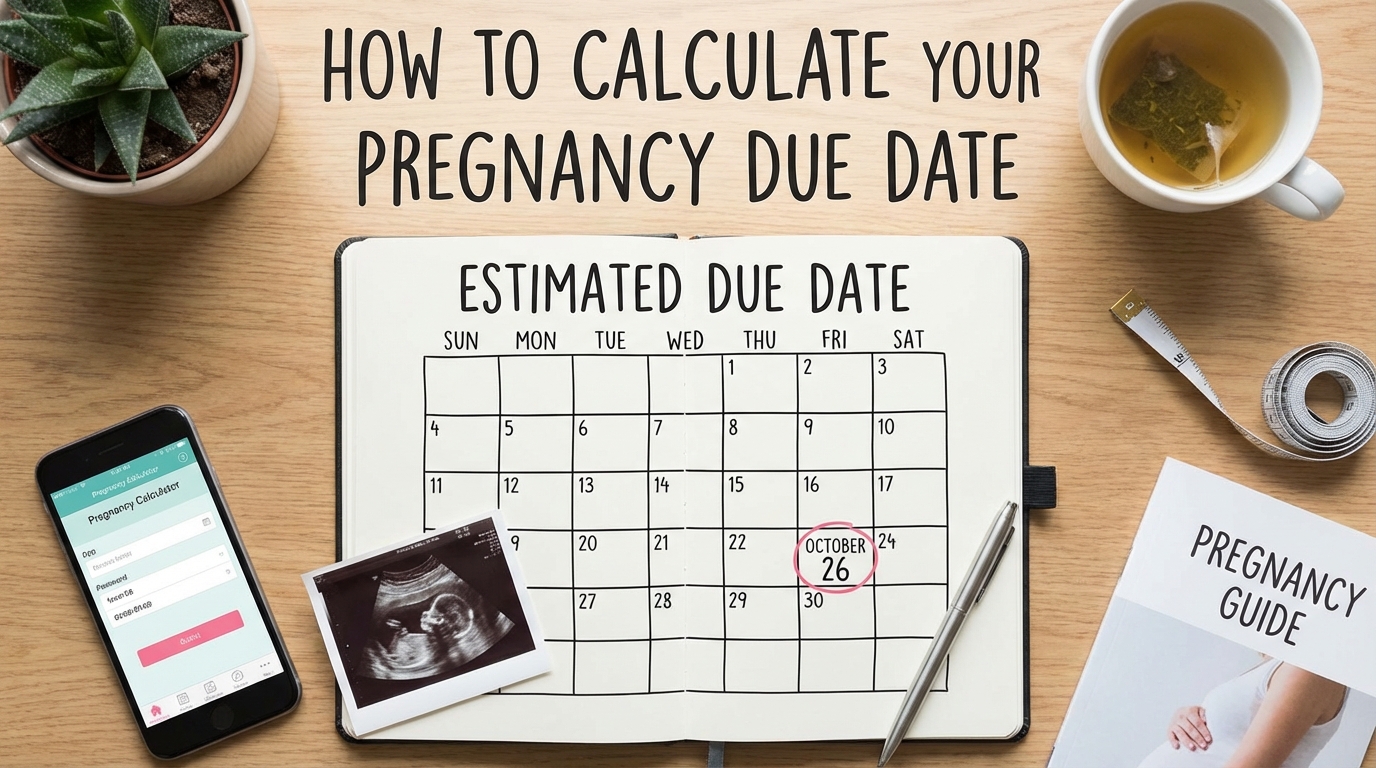
Pregnancy is a journey filled with excitement, anticipation, and a lot of questions—one of the most common being, “How can I calculate my due date of pregnancy?” Knowing your estimated due date (EDD) is crucial for prenatal care, planning, and understanding the growth milestones of your baby. Fortunately, today there are simple and accurate ways to find this out, including using a free online pregnancy due date calculator.
Why Knowing Your Due Date Matters
Your due date is the estimated day your baby is likely to be born. While only about 5% of babies are born on their exact due date, knowing this estimate helps you and your healthcare provider:
- Schedule prenatal appointments – Regular check-ups are timed according to gestational age.
- Track fetal development – From ultrasounds to growth charts, gestational age is key.
- Plan for labor and delivery – Preparing for the arrival of your baby becomes easier.
- Identify potential risks – Knowing if a pregnancy is overdue or preterm can help manage complications early.
How Do I Calculate Due Date?
There are multiple ways to calculate your pregnancy due date, each with varying degrees of accuracy. Let’s explore the most common methods.
1. Using the First Day of Your Last Menstrual Period (LMP)
One of the easiest ways to calculate your due date is based on the first day of your last menstrual period. Most pregnancies last around 280 days (40 weeks) from the start of your last period.
How it works:
- Note the first day of your last menstrual period.
- Add 280 days (or 40 weeks) to that date.
This gives you an approximate due date. For example, if your LMP was March 1, your estimated due date would be December 6.
Pros: Simple and does not require medical tests.
Cons: Accuracy depends on having regular menstrual cycles; irregular cycles can affect precision.
2. Using Ovulation or Conception Date
If you know the exact date you conceived, you can calculate your due date by adding 266 days (38 weeks) to the conception date. This method can be more accurate than the LMP method because conception usually occurs about two weeks after your period starts, depending on your cycle length.
Example: If you conceived on March 15, your estimated due date would be December 5.
3. Using Ultrasound Measurements
Ultrasound is a medical method to calculate gestational age and can be highly accurate, especially during the first trimester. During an early ultrasound, the size of the embryo or fetus is measured to estimate how far along the pregnancy is.
Pros: More accurate than LMP if cycles are irregular.
Cons: Requires medical visits and may not be available to everyone immediately.
4. Using a Pregnancy Due Date Calculator
A pregnancy due date calculator is the easiest and fastest way to estimate your due date. It’s a free, online tool where you can enter:
- First day of your last menstrual period (LMP)
- Date of conception (if known)
- Ultrasound measurement details (optional)
The calculator will automatically compute your estimated due date and gestational age in weeks and days.
Benefits of Using an Online Pregnancy Due Date Calculator:
- Quick and easy: No complex math required.
- Accurate estimates: Uses medically proven formulas.
- Convenient: Accessible anytime, anywhere from your phone or computer.
- Helpful for planning: Provides important pregnancy milestones.
Our free online pregnancy due date calculator is designed for simplicity and accuracy. By entering your LMP or conception date, you can instantly find your estimated due date and track your pregnancy journey with confidence.
Step-by-Step Guide: How Can I Calculate My Due Date of Pregnancy Online
Here’s how you can calculate your due date in just a few clicks using our free calculator:
- Open the pregnancy due date calculator on our website.
- Enter the first day of your last menstrual period (LMP). If known, you can also add your conception date.
- Click “Calculate”.
- View your results, which include:
- Estimated due date (EDD)
- Current gestational age
- Key milestones by week
It’s that simple!
Why Choose an Online Calculator Over Manual Methods?
While manual methods like the LMP or conception date can work, a digital pregnancy due date calculator:
- Reduces errors in calculation
- Offers instant results
- Can include adjustments for cycle irregularities
- Provides an easy-to-read format with clear dates
This is why more expectant parents are turning to online tools for accurate and stress-free results.
Understanding the Accuracy of Your Due Date
It’s important to remember that a due date is an estimate, not a guarantee. Only about 1 in 20 babies arrive on their exact due date. Most births occur within a two-week window before or after the calculated date. Factors that can influence your due date include:
- Irregular menstrual cycles
- Late ovulation
- Differences in fetal growth
- Multiple pregnancies (twins or triplets)
Even so, having an estimated due date helps you and your healthcare provider plan effectively and monitor your pregnancy progress.
Frequently Asked Questions
How do I calculate due date if I have irregular periods?
If your menstrual cycle is irregular, using the date of ovulation or an early ultrasound can give a more accurate estimate than the LMP. Our online calculator can also adjust for cycle length differences.
Can a pregnancy due date change?
Yes. Ultrasound measurements or new information about your conception can refine your due date. Your doctor may update your EDD during prenatal care visits.
Is the calculator safe to use?
Absolutely. Our pregnancy due date calculator is free, confidential, and does not store personal information. It’s designed to provide quick and accurate estimates.
How often should I check my due date?
You can check your due date anytime during your pregnancy. Early in the first trimester, it’s helpful to establish a baseline. Later, ultrasounds may adjust the estimate slightly.
Conclusion
Knowing how to calculate your due date is one of the most important steps in prenatal care. Whether you prefer traditional methods like using your LMP, calculating from your conception date, or relying on ultrasound measurements, the easiest and most reliable way is to use an online pregnancy due date calculator.
Our free tool allows you to get your estimated due date in seconds, track your gestational age, and monitor your pregnancy milestones. Accurate, fast, and stress-free—calculating your due date has never been easier.
Take control of your pregnancy journey today and try our pregnancy due date calculator to find out when your little one is expected to arrive!